States

Government Finance in Arizona, with a Focus on Education

Examines Arizona state government finance over time; compares Arizona to the nation and to other states on combined state and local government finance. Investigates public education finance and educational outcomes. Considers public-sector needs and suggests ways to boost revenue.
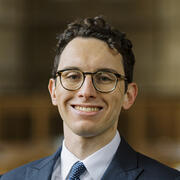
Sean Ewen
Sean Ewen, Ph.D.
Research Economist, L. William Seidman Research Institute

Dr. Sean Ewen originally joined Seidman in August 2024 as a Postdoctoral Researcher. In July, 2025, he was promoted to a Research Economist. He holds a Ph.D. in Economics from University of Washington and a B.S. in Mathematics and Economics from American University. His research interests focus on structural models of oligopolistic industries such as airlines and banks, and environmental economics. 

Dennis Hoffman, Ph.D.
Director, Office of the University Economist; Director, Center for Competitiveness and Prosperity Research; Professor of Economics

Dennis received a B.A. in economics and mathematics from Grand Valley State University, a M.S. in economics from Michigan State University, and a Ph.D. in economics from Michigan State University in 1978. He has served on the faculty of the Department of Economics at ASU since 1979, as director of ASU’s L. William Seidman Research Institute (2004-24), and as the director of the Office of the University Economist since 2005.

Tom Rex, M.B.A.
Tom Rex, M.B.A.
Associate Director, Center for Competitiveness and Prosperity Research; Manager of Research Initiatives, Office of the University Economist

After receiving his Bachelor of Business Administration from the University of Toledo, Tom earned his Master of Business Administration from Arizona State University in 1976. After working in the private sector, he joined ASU in 1980, working for the predecessor of the L. William Seidman Research Institute. Since 2005, he has served as manager of research initiatives in the Office of the University Economist.


The Development of High-Technology Centers in the United States, with a Focus on Arizona

Examines the determinants of the locations of high-tech clusters in the United States. Summarizes the development of high-tech activities in Arizona, Metro Phoenix, and Metro Tucson relative to selected states and metropolitan areas.


EXECUTIVE SUMMARY

Kent Hill, Ph.D.
Kent Hill, Ph.D.
Principal Research Economist, L. William Seidman Research Institute

After completing his undergraduate degree in economics at Wake Forest University, Kent received his Ph.D. in economics from Rice University in 1979. He was an assistant professor at ASU from 1978 to 1983. After leaving the university for seven years, during which he worked in the research department of the Federal Reserve Bank of Dallas, he returned to ASU to teach in 1991. He joined ASU’s L. William Seidman Research Institute in 1999.

Dennis Hoffman, Ph.D.
Director, Office of the University Economist; Director, Center for Competitiveness and Prosperity Research; Professor of Economics

Dennis received a B.A. in economics and mathematics from Grand Valley State University, a M.S. in economics from Michigan State University, and a Ph.D. in economics from Michigan State University in 1978. He has served on the faculty of the Department of Economics at ASU since 1979, as director of ASU’s L. William Seidman Research Institute (2004-24), and as the director of the Office of the University Economist since 2005.

Eva Madly, M.A.
Eva Madly, M.A.
Senior Research Economist, L. William Seidman Research Institute

Eva received her B.S. in finance from Babes-Bolyai University in Romania, a M.S. in business management from Politehnica University in Romania, and a M.A. in economics from Western Michigan University in 2000. She worked as a research analyst at the W. E. Upjohn Institute in Kalamazoo, Michigan prior to joining ASU’s L. William Seidman Research Institute in 2007.

Tom Rex, M.B.A.
Tom Rex, M.B.A.
Associate Director, Center for Competitiveness and Prosperity Research; Manager of Research Initiatives, Office of the University Economist

After receiving his Bachelor of Business Administration from the University of Toledo, Tom earned his Master of Business Administration from Arizona State University in 1976. After working in the private sector, he joined ASU in 1980, working for the predecessor of the L. William Seidman Research Institute. Since 2005, he has served as manager of research initiatives in the Office of the University Economist.

Migration to and from Arizona (Updated)

Summarizes migration data by state from three sources: the Internal Revenue Service, the American Community Survey, and the University of Wisconsin.


EXECUTIVE SUMMARY

Dennis Hoffman, Ph.D.
Director, Office of the University Economist; Director, Center for Competitiveness and Prosperity Research; Professor of Economics

Dennis received a B.A. in economics and mathematics from Grand Valley State University, a M.S. in economics from Michigan State University, and a Ph.D. in economics from Michigan State University in 1978. He has served on the faculty of the Department of Economics at ASU since 1979, as director of ASU’s L. William Seidman Research Institute (2004-24), and as the director of the Office of the University Economist since 2005.

Tom Rex, M.B.A.
Tom Rex, M.B.A.
Associate Director, Center for Competitiveness and Prosperity Research; Manager of Research Initiatives, Office of the University Economist

After receiving his Bachelor of Business Administration from the University of Toledo, Tom earned his Master of Business Administration from Arizona State University in 1976. After working in the private sector, he joined ASU in 1980, working for the predecessor of the L. William Seidman Research Institute. Since 2005, he has served as manager of research initiatives in the Office of the University Economist.

2020 Census Results for Arizona: Part 2

Arizona’s median age in 2020 of 38.9 was nearly identical to the national average, but the state’s increase in median age between 2010 and 2020 tied for the highest in the country. Arizona’s larger-than-average increase can be traced to strong net in-migration at early retirement and traditional retirement ages.

Tom Rex, M.B.A.
Tom Rex, M.B.A.
Associate Director, Center for Competitiveness and Prosperity Research; Manager of Research Initiatives, Office of the University Economist

After receiving his Bachelor of Business Administration from the University of Toledo, Tom earned his Master of Business Administration from Arizona State University in 1976. After working in the private sector, he joined ASU in 1980, working for the predecessor of the L. William Seidman Research Institute. Since 2005, he has served as manager of research initiatives in the Office of the University Economist.

Regional Economic Competitiveness, Part 3: Business Location Factors and an Assessment of Arizona's Competitiveness

On the most reliable measures of business climate, Arizona ranks in the middle of the states. The most important business location factors that can be influenced by public policy are labor force quality and availability, and physical infrastructure quality and availability. Education is a key component of labor force quality. Arizona ranks quite poorly among the states on educational attainment, quality, and achievement.

Dennis Hoffman, Ph.D.
Director, Office of the University Economist; Director, Center for Competitiveness and Prosperity Research; Professor of Economics

Dennis received a B.A. in economics and mathematics from Grand Valley State University, a M.S. in economics from Michigan State University, and a Ph.D. in economics from Michigan State University in 1978. He has served on the faculty of the Department of Economics at ASU since 1979, as director of ASU’s L. William Seidman Research Institute (2004-24), and as the director of the Office of the University Economist since 2005.

Tom Rex, M.B.A.
Tom Rex, M.B.A.
Associate Director, Center for Competitiveness and Prosperity Research; Manager of Research Initiatives, Office of the University Economist

After receiving his Bachelor of Business Administration from the University of Toledo, Tom earned his Master of Business Administration from Arizona State University in 1976. After working in the private sector, he joined ASU in 1980, working for the predecessor of the L. William Seidman Research Institute. Since 2005, he has served as manager of research initiatives in the Office of the University Economist.

Regional Economic Competitiveness, Part 2: Economic Clusters in Arizona

Arizona’s subpar performance on measures of productivity and prosperity can largely be traced to three factors:

Dennis Hoffman, Ph.D.
Director, Office of the University Economist; Director, Center for Competitiveness and Prosperity Research; Professor of Economics

Dennis received a B.A. in economics and mathematics from Grand Valley State University, a M.S. in economics from Michigan State University, and a Ph.D. in economics from Michigan State University in 1978. He has served on the faculty of the Department of Economics at ASU since 1979, as director of ASU’s L. William Seidman Research Institute (2004-24), and as the director of the Office of the University Economist since 2005.

Tom Rex, M.B.A.
Tom Rex, M.B.A.
Associate Director, Center for Competitiveness and Prosperity Research; Manager of Research Initiatives, Office of the University Economist

After receiving his Bachelor of Business Administration from the University of Toledo, Tom earned his Master of Business Administration from Arizona State University in 1976. After working in the private sector, he joined ASU in 1980, working for the predecessor of the L. William Seidman Research Institute. Since 2005, he has served as manager of research initiatives in the Office of the University Economist.

Regional Economic Competitiveness, Part 1: Productivity and Prosperity in Arizona

Worldwide, the goal of economic development is to improve prosperity, not simply to grow in economic size. Aggregate growth rates, such as of population and employment, have little (if any) relationship to gains in prosperity.

Dennis Hoffman, Ph.D.
Director, Office of the University Economist; Director, Center for Competitiveness and Prosperity Research; Professor of Economics

Dennis received a B.A. in economics and mathematics from Grand Valley State University, a M.S. in economics from Michigan State University, and a Ph.D. in economics from Michigan State University in 1978. He has served on the faculty of the Department of Economics at ASU since 1979, as director of ASU’s L. William Seidman Research Institute (2004-24), and as the director of the Office of the University Economist since 2005.

Tom Rex, M.B.A.
Tom Rex, M.B.A.
Associate Director, Center for Competitiveness and Prosperity Research; Manager of Research Initiatives, Office of the University Economist

After receiving his Bachelor of Business Administration from the University of Toledo, Tom earned his Master of Business Administration from Arizona State University in 1976. After working in the private sector, he joined ASU in 1980, working for the predecessor of the L. William Seidman Research Institute. Since 2005, he has served as manager of research initiatives in the Office of the University Economist.

The Migration of Young Adults to and from Arizona

The migration efficiency — the ratio of the number of in-migrants to the number of out-migrants — of individuals between the ages of 16 and 26 who moved between commuting zones (CZs: aggregations of counties) during the 2000-to-2018 time period was the highest among the nation’s 26 most-populous CZs in the Denver CZ at 2.52. The Seattle CZ ranked second with an efficiency of 1.83 and the Phoenix CZ (Maricopa, Pinal, and Gila counties) ranked third at 1.78.

Dennis Hoffman, Ph.D.
Director, Office of the University Economist; Director, Center for Competitiveness and Prosperity Research; Professor of Economics

Dennis received a B.A. in economics and mathematics from Grand Valley State University, a M.S. in economics from Michigan State University, and a Ph.D. in economics from Michigan State University in 1978. He has served on the faculty of the Department of Economics at ASU since 1979, as director of ASU’s L. William Seidman Research Institute (2004-24), and as the director of the Office of the University Economist since 2005.

Tom Rex, M.B.A.
Tom Rex, M.B.A.
Associate Director, Center for Competitiveness and Prosperity Research; Manager of Research Initiatives, Office of the University Economist

After receiving his Bachelor of Business Administration from the University of Toledo, Tom earned his Master of Business Administration from Arizona State University in 1976. After working in the private sector, he joined ASU in 1980, working for the predecessor of the L. William Seidman Research Institute. Since 2005, he has served as manager of research initiatives in the Office of the University Economist.

2020 Census Results for Arizona: Part 1

Discusses 2020 census counts and the change between the 2010 and 2020 decennial censuses for the nation, states, metro areas, and Arizona counties and places. Population growth in Arizona during the 2010s was less than in each of the four prior decades.

Tom Rex, M.B.A.
Tom Rex, M.B.A.
Associate Director, Center for Competitiveness and Prosperity Research; Manager of Research Initiatives, Office of the University Economist

After receiving his Bachelor of Business Administration from the University of Toledo, Tom earned his Master of Business Administration from Arizona State University in 1976. After working in the private sector, he joined ASU in 1980, working for the predecessor of the L. William Seidman Research Institute. Since 2005, he has served as manager of research initiatives in the Office of the University Economist.

STEM Economic Activity by State

Investigates STEM economic activity by state, comparing the actual STEM shares to "expected" shares that reflect each state's distribution of population across its metro and nonmetro areas. In 2019, Colorado, the District of Columbia, Maryland, Massachusetts, Utah, Virginia, and Washington each had an actual share substantially greater than expected.

Dennis Hoffman, Ph.D.
Director, Office of the University Economist; Director, Center for Competitiveness and Prosperity Research; Professor of Economics

Dennis received a B.A. in economics and mathematics from Grand Valley State University, a M.S. in economics from Michigan State University, and a Ph.D. in economics from Michigan State University in 1978. He has served on the faculty of the Department of Economics at ASU since 1979, as director of ASU’s L. William Seidman Research Institute (2004-24), and as the director of the Office of the University Economist since 2005.

Tom Rex, M.B.A.
Tom Rex, M.B.A.
Associate Director, Center for Competitiveness and Prosperity Research; Manager of Research Initiatives, Office of the University Economist

After receiving his Bachelor of Business Administration from the University of Toledo, Tom earned his Master of Business Administration from Arizona State University in 1976. After working in the private sector, he joined ASU in 1980, working for the predecessor of the L. William Seidman Research Institute. Since 2005, he has served as manager of research initiatives in the Office of the University Economist.

Subscribe to States